
Interested in how sugar is made? From leafy sugarcane plants to granules that sweeten up bakes and tea, sugar production is a complex process. Here at Transmara Sugar, we partner with local farmers and use modern practices to produce high-quality sugar for you. Every step is crucial to the final product, so let’s break them down to see how this transformation occurs.

Our sugar comes from the sugarcane plant. We work with local sugarcane farmers across the Transmara region, a region located outside of Kenya’s sugar belt. We only use sugarcane grown in Kenya and never import, because we want to celebrate our own crops and farmers. The sugarcane is grown in Kenya’s lush highlands, which are rich in fertile volcanic soil and have a mild climate with the optimal amount of rain and sunlight.
To plant a crop, sections of a mature cane, called setts, are put in the ground. They have nodes that grow into new plants. It takes around 12 to 18 months for a sugarcane crop to mature.
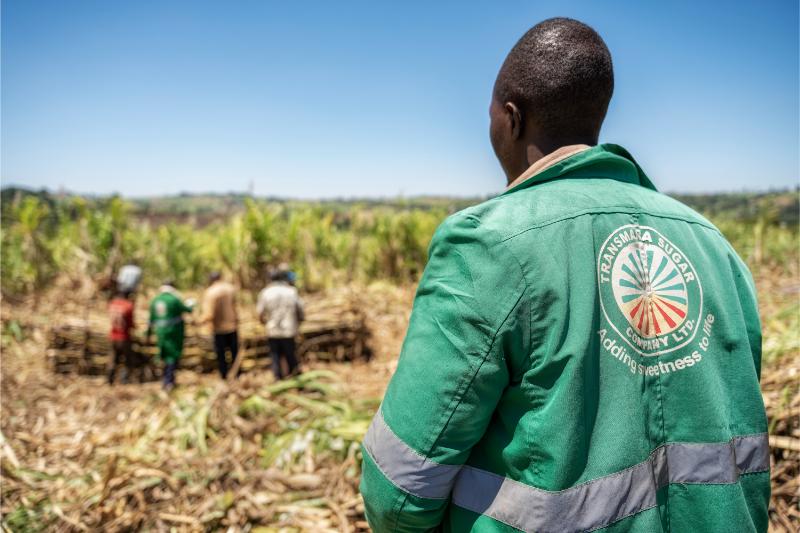
We only work with local farmers, supporting them with training and farming services so we can produce the best sugar together. By partnering with farmers and employing locals, we can help the community grow — just like our sugarcane. Once the sugarcane is ready, Transmara Sugar Company assists in the harvesting and transport of the sugar cane from the fields of our partnering farmers to the factory. The leaves are removed and left on the ground to mulch or sometimes collected to make biogas. The stalks are then transported to our milling factory. Timing is crucial, as sugarcane loses its sugar content after it has been cut, so we must work quickly.
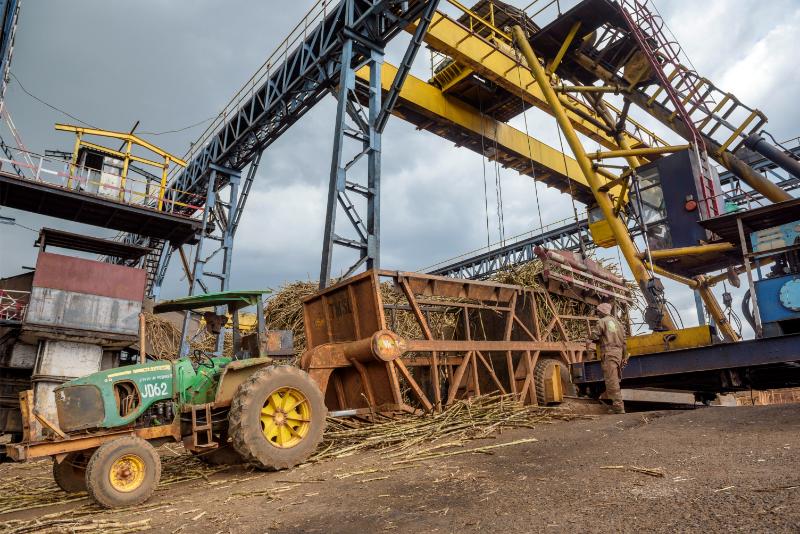


Once the sugarcane is ready and harvested, we help transport the sugarcane to our factory for milling. On arrival at the factory, the sugarcane stalks are self-offloaded by our side loaders, Cane Grabber or the Hilo. They are then piled and fed to the cane carriers with the help of our Cane Unloaders.

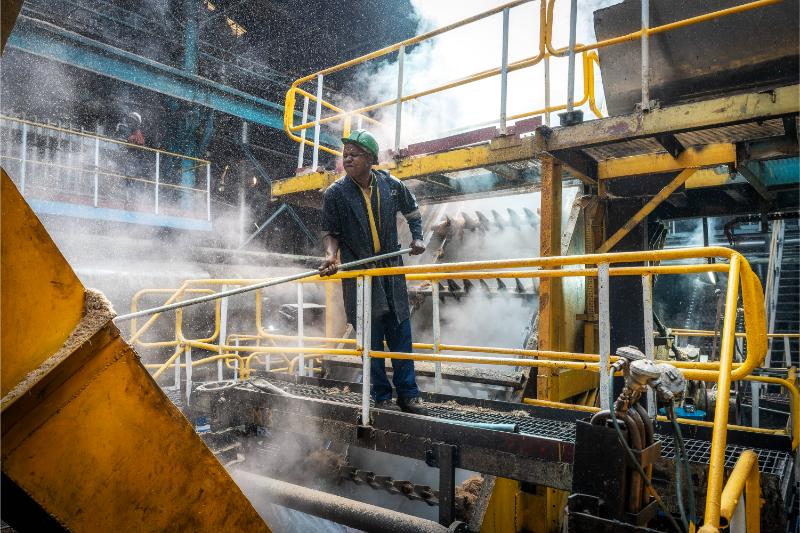
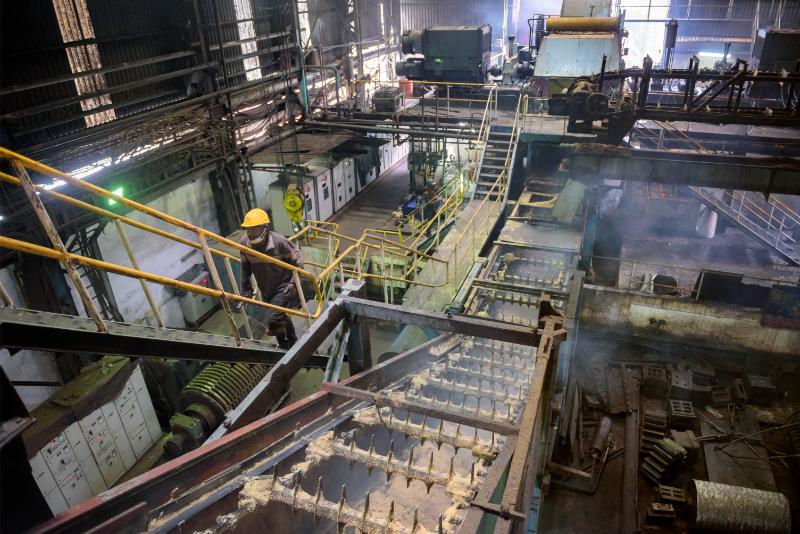
The cane is then passed through a series of equipment, mainly the cutter and the shredder, before it is passed through a set of 5 Mills Tandem, where the maximum juice is extracted for further processing. The bagasse obtained is then sent to our boilers for steam generation.
After milling, the raw juice obtained contains impurities and therefore need to be heated using juice heaters to raise its temperature making it easier to treat. Lime is then added to the heated juice to maintain an appropriate pH level and help the impurities to coagulate.
The juice then enters a clarifier where the heavier impurities settle at the bottom as mud while the clear juice on top is collected for further processing. The removed mud is filtered again to recover any remaining sugar and the collected mud will later be used as a fertiliser in the sugar cane fields.
The clarified juice is then sent to our set of evaporators where heat is used to gradually remove water and concentrate the juice in the form of a thick syrup rich in sugar which will then be ready for the next stage of production being the crystallisation.


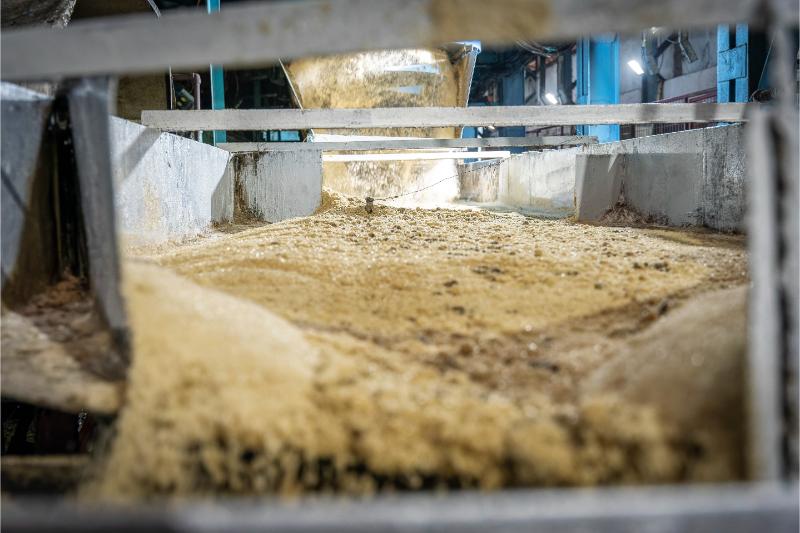

In the crystallisation stage, the syrup is boiled in large vessels called vacuum pans. As water continues to evaporate, the solution becomes even more saturated and sugar crystals begin to form and grow. This mixture is known as the massecuite. The latter is then sent to crystallisers and later to a set of centrifugals which spin at high speed to separate the sugar crystals from the remaining liquid syrup called molasses.
The molasses are sent to the storage tanks where it will then be sold to other parties for the production of Ethanol and/or spirits.
The wet sugar crystals from the centrifugals are sent to the sugar dryer where warm air removes the excess moisture to produce dry and free flowing sugar. Finally the dried sugar is screened and sent to the storage bins for Packaging.
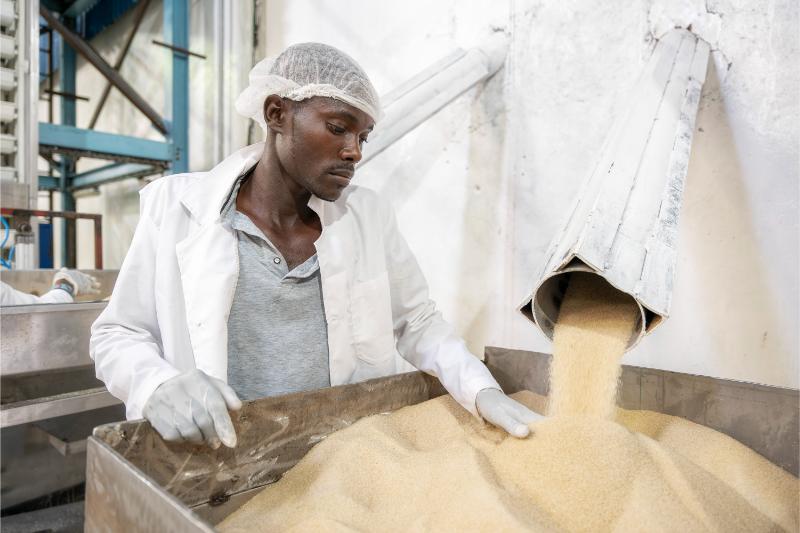
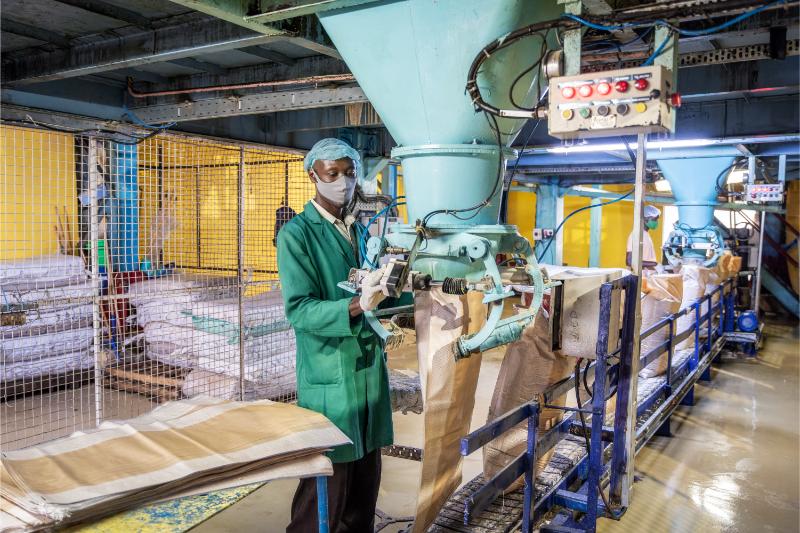


All that’s left to do is package our sugar and transport it to retailers across Kenya! At Transmara Sugar, packing is done in 25kg, 50kg and also pack in retail as 0.5kg, 1kg and 2kg. We are proud to work with local farmers to bring you quality sugar from cane to granule.
Did you know?
Nothing goes to waste, and we turn the byproducts, such as the dry stalks (bagasse), into briquettes. We sell these briquettes locally for use in other industries, as well as for powering our own factory. Every part of the sugarcane plant is utilised, so nothing is wasted.


